Most honey on Indian shelves is labelled pure, and much of it genuinely comes from bees. Yet two pure honeys can look, taste and behave very differently depending on what happened to them after they left the hive. That journey is the difference between raw and processed honey.
What raw honey means
Raw honey is honey as close as practical to how it sat in the comb. It is extracted without heating, strained just enough to remove wax and bits of bee, and jarred. It keeps its natural pollen, its enzymes and the aromatic compounds that make one honey taste of litchi blossom and another of eucalyptus.
Labels use the word “raw” loosely, so it is worth looking for specifics: cold-extracted, unheated, unblended, a named flower and region, and a lab report.
What processing involves
Commercial processing usually has three aims: keep the honey liquid on the shelf, make it look clear, and make it taste the same all year. To get there, honey is typically:
- Heated, which melts crystals, slows recrystallisation and makes the honey easier to pump and bottle.
- Finely filtered, sometimes under pressure, which removes pollen and fine particles that seed crystals.
- Blended from many sources so every batch tastes alike.
None of this makes processed honey unsafe. It does change what you get in the jar.
How the two compare
| Raw honey | Processed honey | |
|---|---|---|
| Look | Can be slightly cloudy | Clear and glossy |
| Texture over time | Crystallises within weeks or months | Stays liquid for longer |
| Aroma and taste | Distinct to its flowers and season | Milder, uniform |
| Natural enzymes | Retained | Reduced by heat |
| HMF (a heat marker) | Low | Rises with heating and age |
| Pollen | Present | Largely filtered out |
| Origin | Usually named | Often a blend |
Why the enzymes and HMF matter
Bees add enzymes such as diastase and invertase to nectar as they turn it into honey. Heat breaks these down, and labs use diastase activity as one sign of how gently a honey has been handled. Heating and long storage also create a compound called HMF. FSSAI caps HMF in honey, and in 2025 issued an advisory treating it as a quality parameter. A low HMF figure on a lab report is a good sign of careful handling.
How to tell which one you are buying
- Read beyond “pure”. Look for unheated, cold-extracted or raw, plus a named flower and region.
- Expect crystallisation. A raw honey that sets in your cupboard is behaving normally. Here is why.
- Check the lab report for low HMF and good diastase activity, and for the tests that rule out syrups. Our guide to checking honey purity explains what to look for.
- Taste side by side. Raw single-flower honeys taste unmistakably different from one another. Processed blends tend to taste alike.
Our honeys
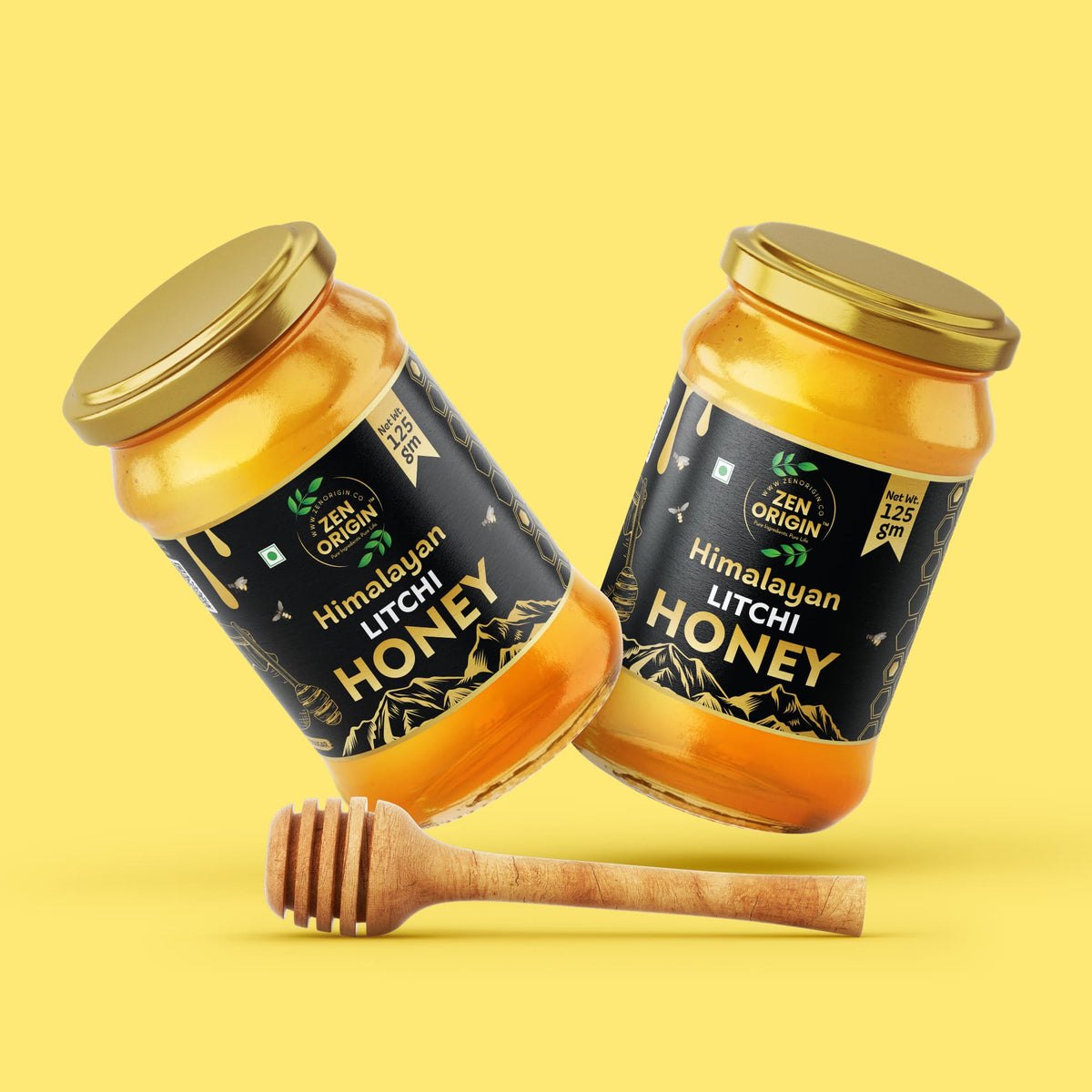
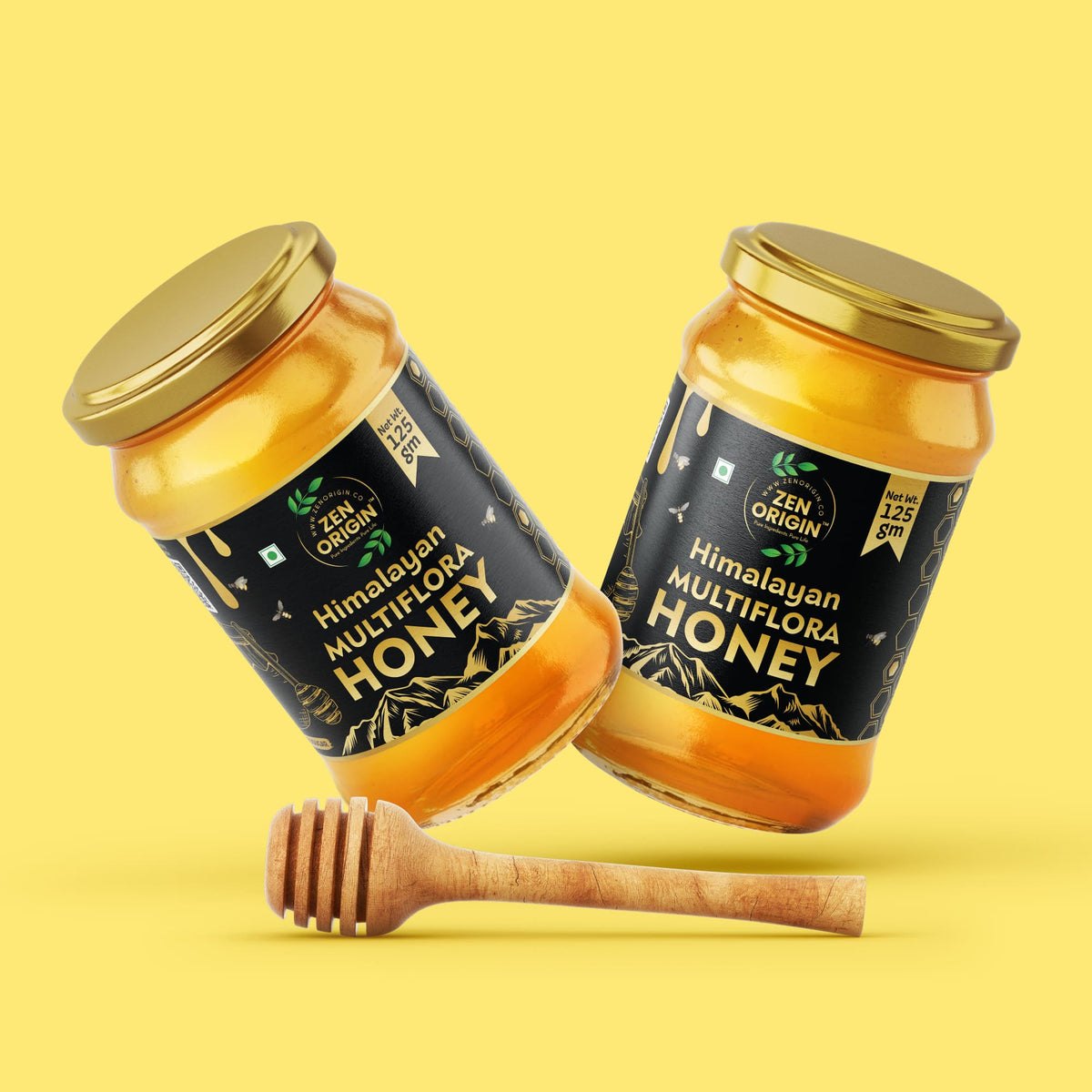
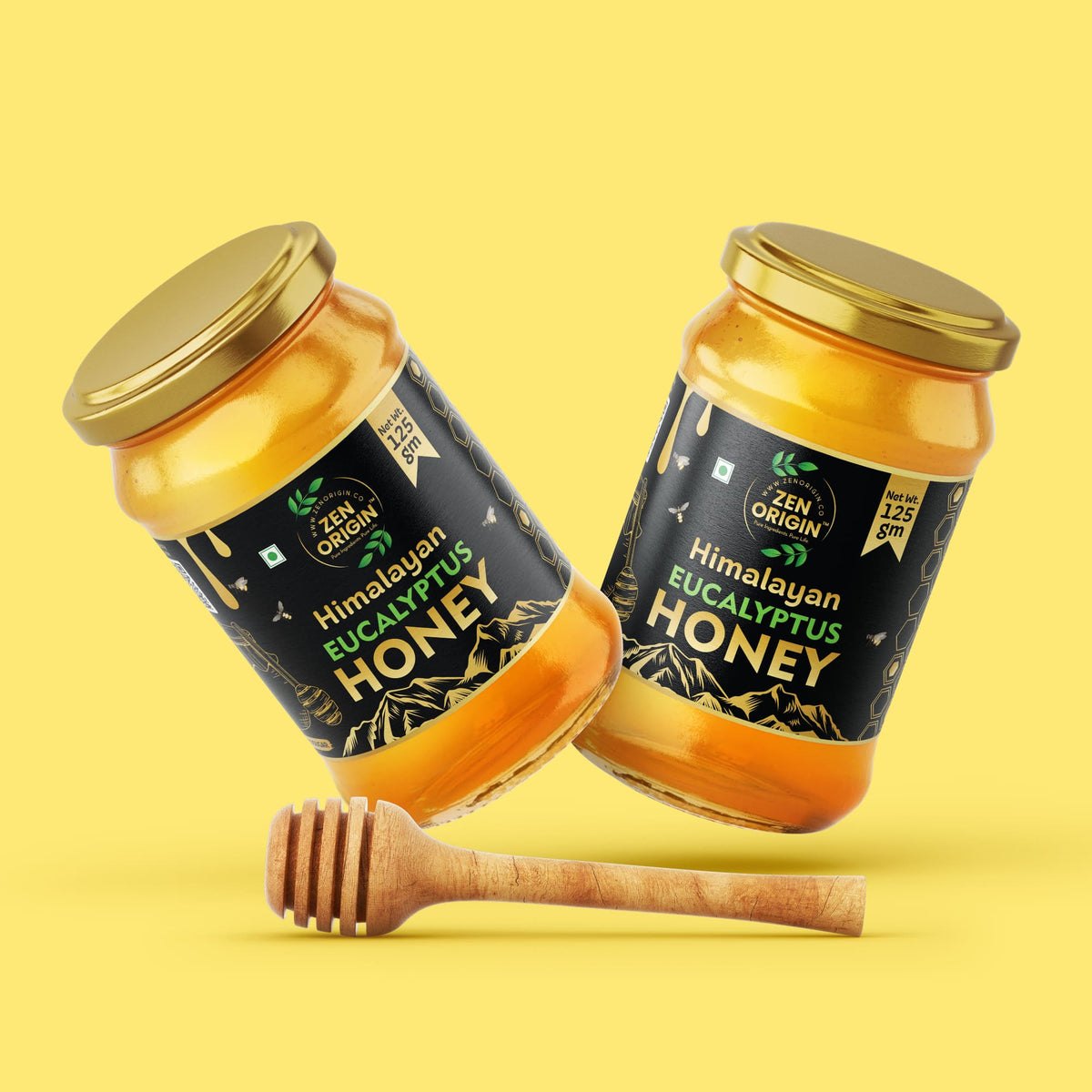
All three of our honeys are raw: cold-extracted, lightly strained to remove wax, and jarred without heating or blending. Litchi, multiflora and eucalyptus each taste of their own flowers, and every batch is lab-tested.