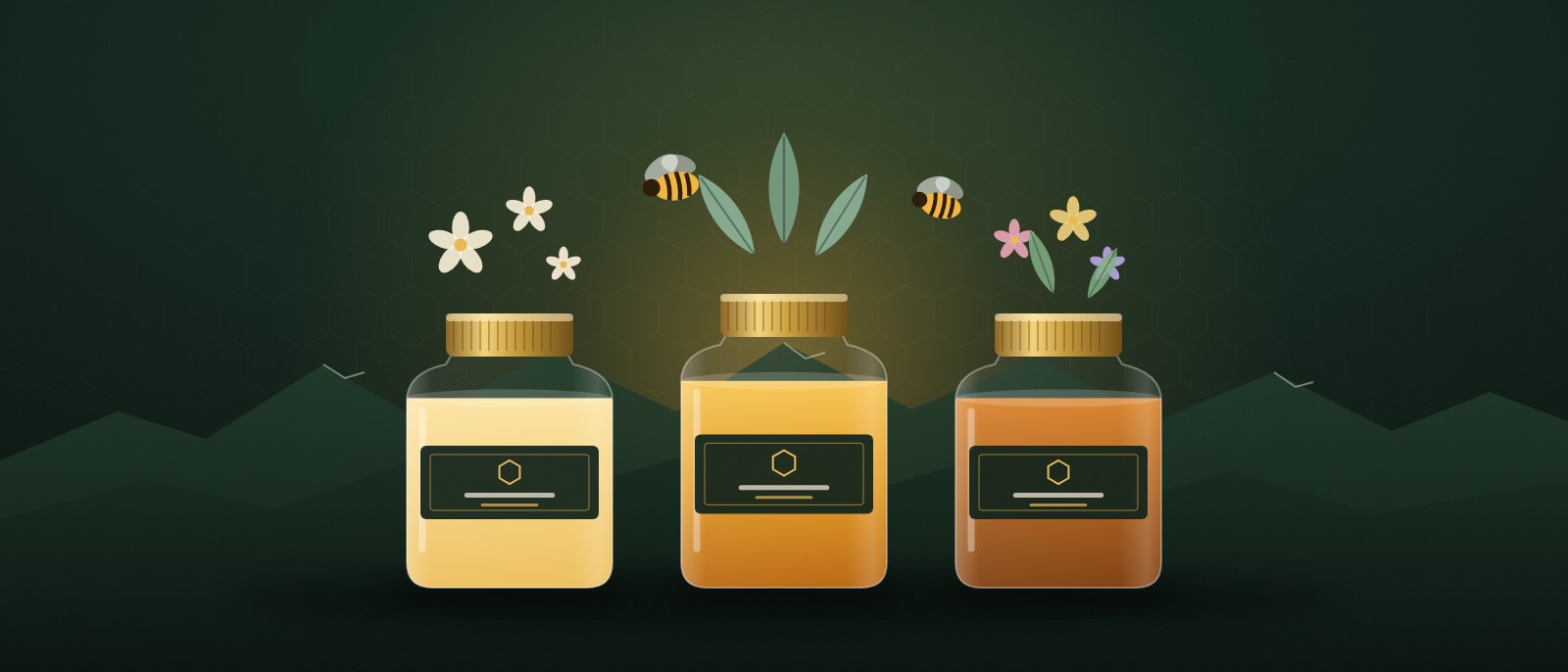
All honey is not the same honey. What the bees forage on decides the colour, the aroma, the texture and even how quickly a jar crystallises. Our three honeys come from hives in and above the Kangra Valley in Himachal Pradesh, yet they taste nothing alike. Here is how to choose between them.
Monofloral and multifloral: what the words mean
A monofloral honey comes mostly from one kind of blossom. Beekeepers place hives beside a flowering crop, such as a litchi orchard or a eucalyptus grove, and harvest while that flower dominates. The honey carries its flower’s character clearly, and it can only be made in that flower’s season.
A multifloral honey, often sold as multiflora or wildflower honey, comes from many species at once. Its taste shifts through the year as different plants bloom, so no two harvests are identical.
The three honeys at a glance
| Litchi | Eucalyptus | Multiflora | |
|---|---|---|---|
| Source | Litchi orchards in spring bloom | Eucalyptus groves | Wild meadows above the valley |
| Colour | Pale gold | Amber | Deeper amber |
| Taste | Floral, soft fruit | Herbal, warm, cool menthol finish | Rounded, warm caramel |
| Intensity | Light | Bold | Medium |
| Best for | Fruit, yoghurt, iced tea, cheese | Ginger tea, warm water, a spoon on its own | Toast, porridge, everyday cooking |
| Availability | Once a year | Year-round | Year-round, changes by season |
Litchi honey: light, floral, seasonal
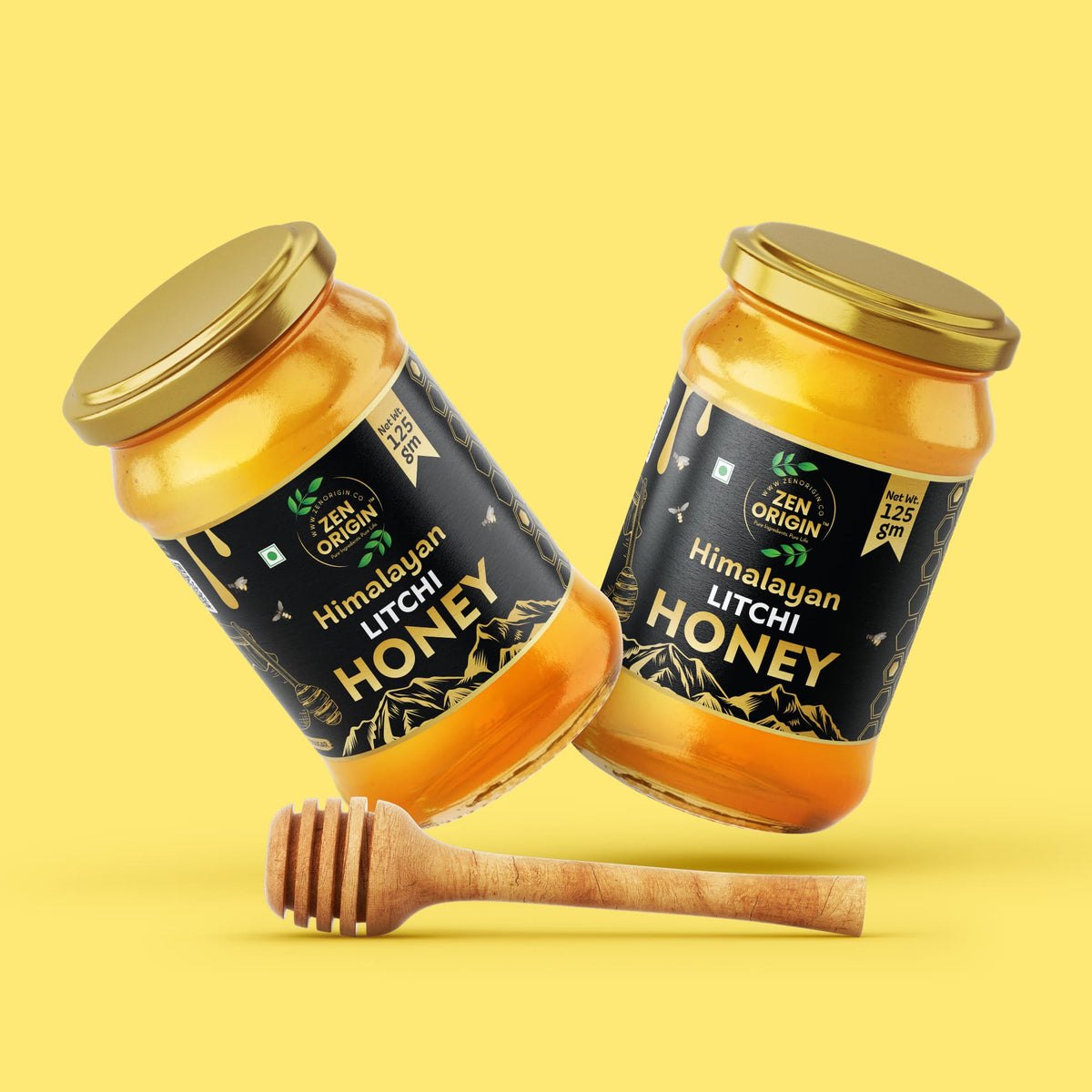
Litchi trees flower for only a few weeks each spring, and that short window is the only time litchi honey can be made. It is the palest of the three, with a perfumed, floral lift and a soft fruit note that fades cleanly rather than lingering.
Because it is delicate, litchi honey shines where it is not competing with strong flavours: drizzled over cut fruit or yoghurt, stirred into iced tea, or served with soft cheese. It is also the jar we suggest for people who find most honey too heavy. Once the season’s harvest sells out, the next arrives a year later.
Eucalyptus honey: herbal and unmistakable
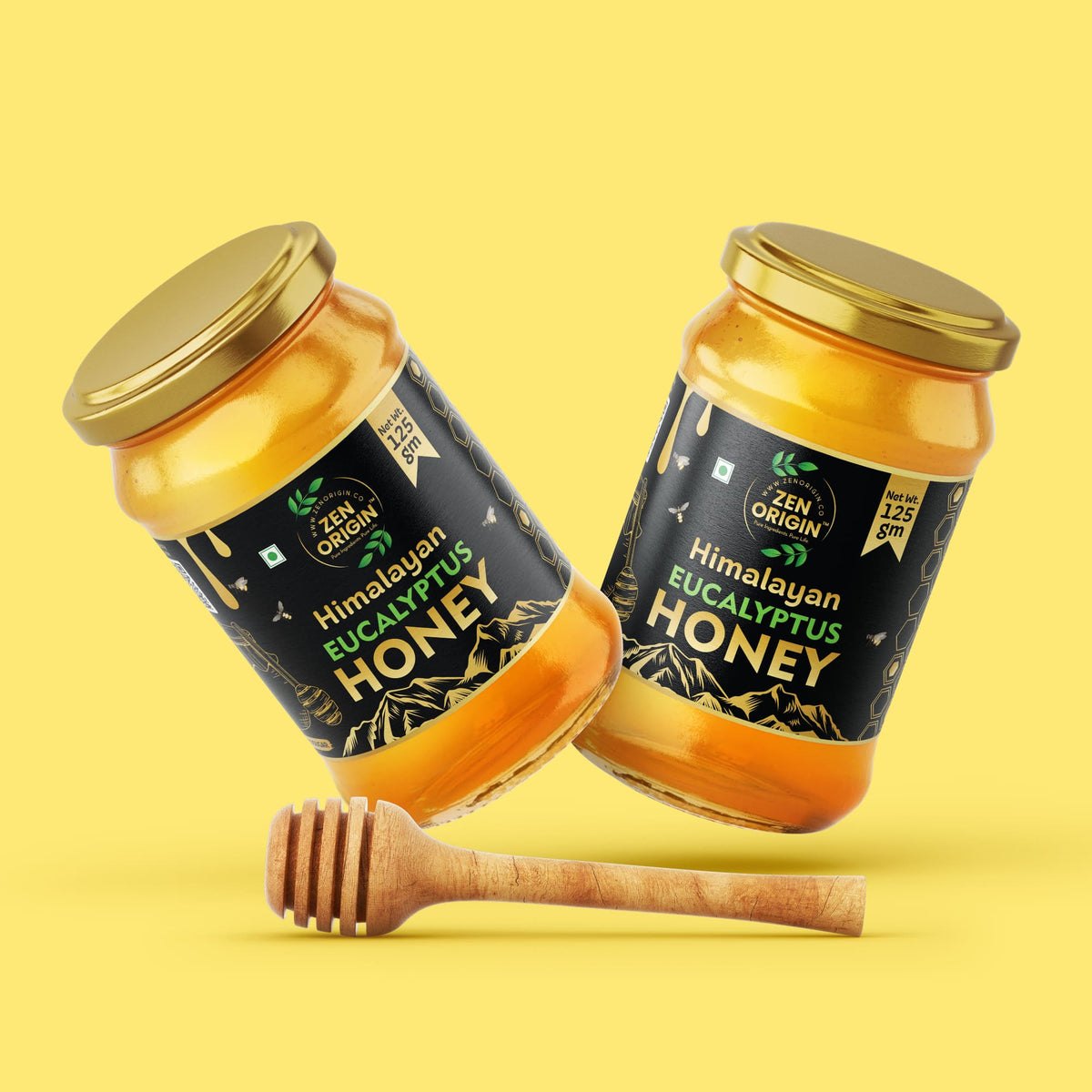
Eucalyptus is one of the few honeys most people can identify blind. The nectar carries the tree’s aromatic character, so eucalyptus honey is warm and herbal on the tongue with a cool, clean finish. It does not taste of eucalyptus oil; the effect is fresh rather than medicinal.
It is the strongest of our three and the one customers reorder most, usually for a spoon in warm water first thing in the morning or stirred into ginger tea. A little goes a long way.
Multiflora honey: the everyday jar
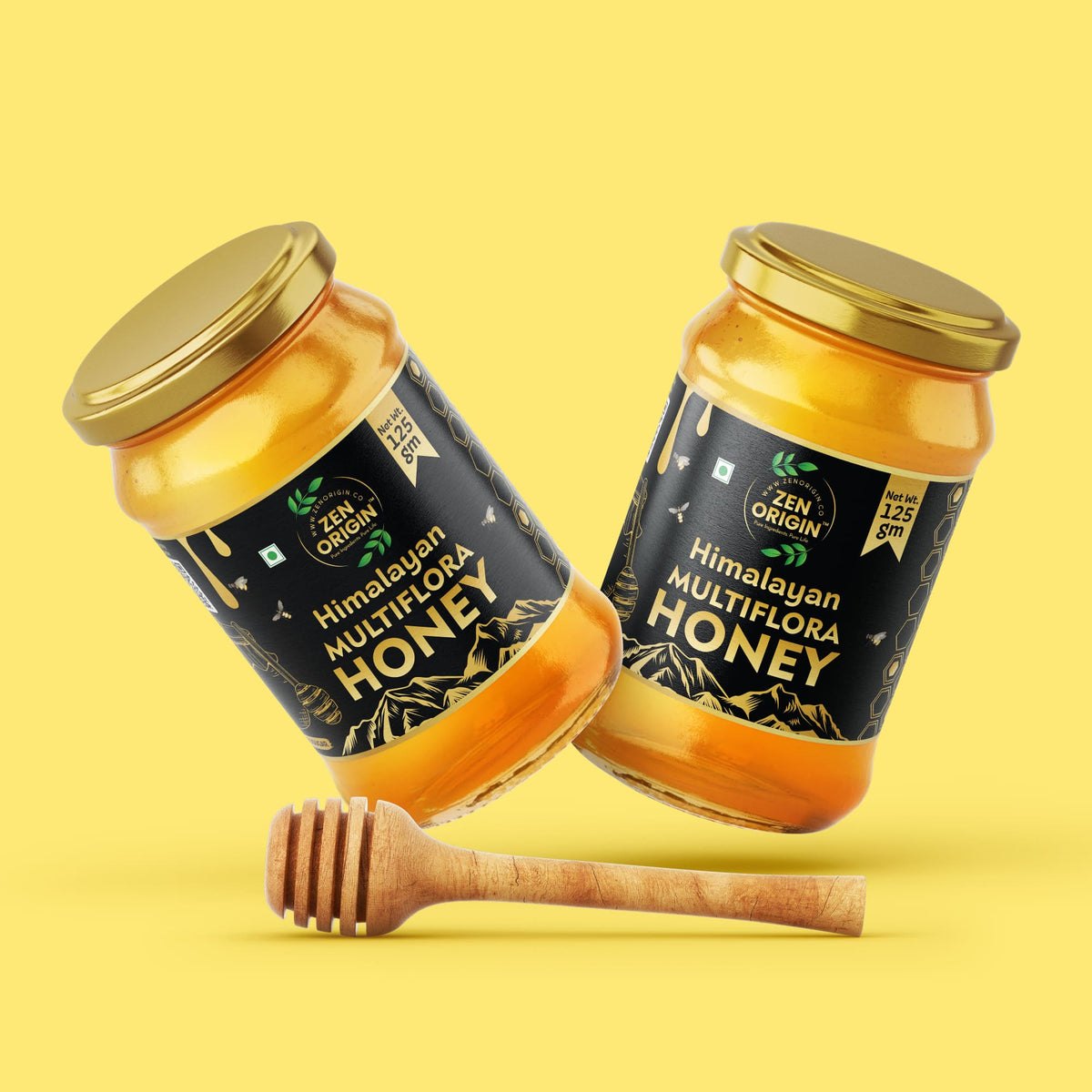
Our multiflora honey comes from bees foraging across dozens of wild species on the meadows above the valley. It is rounder and deeper than litchi, with a warm caramel note and a long finish, and it changes gently from spring to autumn because the meadows do. We do not blend harvests to make them match.
This is the most versatile of the three: round enough for toast and porridge, sturdy enough for baking, salad dressings and glazes, and pleasant in warm water with lemon.
Which one should you choose?
- For your morning cup of warm water or tea: eucalyptus, or multiflora if you prefer something softer.
- For fruit, yoghurt and desserts: litchi.
- For daily cooking and the family table: multiflora.
- For a gift: litchi, for its rarity, or a mix of all three.
- If you cannot decide: try them side by side. Our Bonanza box lets you pick any four 500 g jars, in any mix, for one price.
A note on how they are made
All three are raw: cold-extracted, lightly strained to remove wax, and jarred without heating, flavouring or added sugar. That keeps each honey’s natural aroma intact, and it means all three will crystallise in time. If that happens, here is why, and how to soften it. Every batch is lab-tested, and the reports are linked on each product page.